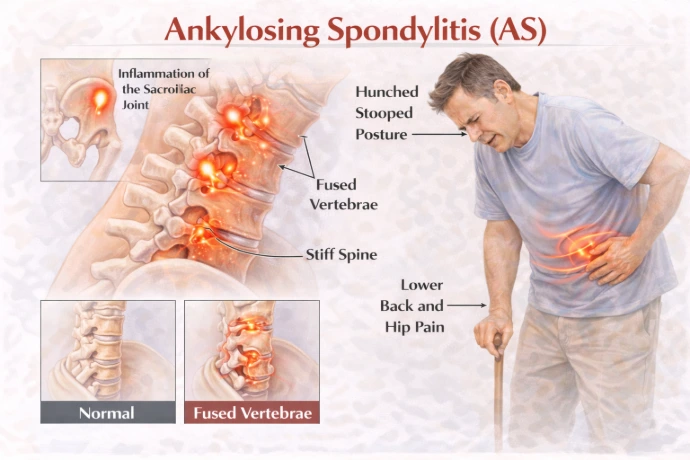
At Mr. Yu Master Acupuncture & Healthcare, we provide a comprehensive Traditional Chinese Medicine (TCM)–based approach to support individuals living with Ankylosing Spondylitis (AS). AS is a chronic inflammatory condition that mainly affects the spine, sacroiliac joints, and surrounding soft tissues, often causing persistent back pain, morning stiffness, reduced spinal mobility, and fatigue.
From a TCM perspective, AS is commonly associated with Kidney deficiency, Qi and blood stagnation, and wind-cold-damp obstruction in the spine and joints. These imbalances may lead to chronic stiffness, pain, and gradual limitation of movement. By improving circulation, warming and nourishing the spine, and relaxing tight tissues, TCM helps support spinal comfort and functional movement.
Our TCM Support Methods for Ankylosing Spondylitis
1. Acupuncture
Carefully selected acupuncture points along the spine, lower back, hips, and limbs help to:
- Improve circulation of Qi and blood
- Reduce spinal pain and stiffness
- Support flexibility and mobility
- Ease inflammation-related discomfort
2. Electro-Acupuncture
When symptoms are persistent or pronounced, electro-acupuncture may:
- Provide deeper stimulation to spinal muscles
- Support relief from chronic inflammatory pain
- Enhance muscle activation and stability
3. Cupping Therapy
Cupping applied to the back and surrounding muscles helps to:
- Release muscle tightness and fascia restriction
- Improve blood flow along the spine
- Reduce heaviness and stiffness, especially in the morning
4. TCM Spine Support & Bone Setting (When Appropriate)
Gentle manual techniques may help to:
- Support spinal and pelvic alignment
- Reduce mechanical stress on affected joints
- Improve posture and movement coordination
5. Mr. Yu Special Massage
Our signature massage focuses on the spine, hips, and surrounding muscle groups to:
- Ease chronic tension and rigidity
- Improve flexibility and circulation
- Support more comfortable daily movement