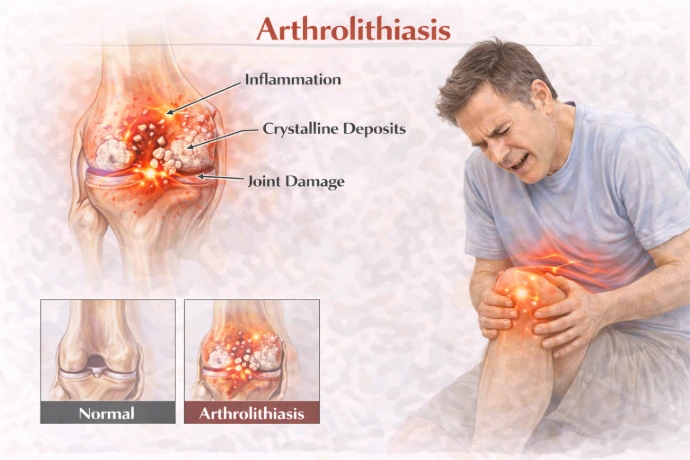
At Mr. Yu Master Acupuncture & Healthcare, we provide a comprehensive Traditional Chinese Medicine (TCM) approach to support individuals experiencing arthrolithiasis—a condition involving calcified deposits or loose bodies within a joint, commonly causing joint pain, swelling, stiffness, locking sensations, and reduced range of motion.
From a TCM perspective, arthrolithiasis is often related to Qi and blood stagnation, phlegm-damp accumulation, and long-term obstruction of meridians around the affected joint. These imbalances may develop following injury, chronic inflammation, overuse, or age-related degeneration. By improving circulation and reducing local obstruction, TCM helps support joint comfort and functional movement.
Our TCM Support Methods for Arthrolithiasis
1. Acupuncture
Targeted acupuncture points around the affected joint and related meridians help to:
- Improve circulation of Qi and blood
- Reduce joint pain, swelling, and stiffness
- Support smoother joint movement
- Ease surrounding muscle tension
2. Electro-Acupuncture
When joint discomfort is persistent or movement is restricted, electro-acupuncture may:
- Enhance stimulation of deep joint and muscle tissues
- Support reduction of chronic pain
- Improve muscle activation and joint stability
3. Cupping Therapy
Cupping applied to muscles surrounding the affected joint helps to:
- Release soft-tissue tightness
- Improve local blood flow
- Reduce heaviness and joint discomfort
Expected Benefits
With consistent TCM support at Mr. Yu Master Acupuncture & Healthcare, patients with arthrolithiasis often experience:
- Reduced joint pain and stiffness
- Improved joint mobility and flexibility
- Less swelling or locking sensation
- Better comfort during daily activities
- Enhanced overall musculoskeletal wellbeing